

Hey there! As a supplier of machine parts, I've had my fair share of experience with all sorts of components. One part that's super important in many machines is the gear. You might be wondering, "What's the big deal about gears?" Well, let me break it down for you.
First off, gears are like the unsung heroes of the machine world. They're those toothed wheels that work together to transfer power and motion from one part of a machine to another. You can find them in everything from simple toys to complex industrial equipment.
One of the main functions of a gear is to change the speed of a machine. You see, when two gears of different sizes are meshed together, the smaller gear rotates faster than the larger one. This is called a gear ratio. For example, if you have a large gear with 40 teeth and a small gear with 20 teeth, the small gear will rotate twice as fast as the large gear for every turn. This is really useful in machines where you need to control the speed. Like in a car transmission, gears are used to change the speed of the wheels depending on how fast you want to go.
Gears also play a crucial role in changing the direction of motion. If you've ever played with a toy car that has a steering mechanism, you'll notice that the gears are used to turn the wheels left or right. By meshing gears at different angles, you can make the output shaft move in a different direction than the input shaft. This is essential in machines where you need to transfer power in multiple directions, like in a robot arm.
Another important function of gears is to increase or decrease the torque. Torque is basically the force that causes an object to rotate. When you use a gear system, you can trade speed for torque or vice versa. For instance, if you want to lift a heavy object, you can use a gear system to increase the torque at the expense of speed. This is why you'll often see large gears used in machines that need to generate a lot of force, like a crane.
Now, let's talk about the different types of gears. There are several types of gears, each with its own unique characteristics and applications. The most common type is the spur gear. Spur gears have straight teeth that are parallel to the axis of rotation. They're simple and easy to manufacture, making them a popular choice for many applications. You can find spur gears in things like clocks, electric motors, and power tools.
Another type of gear is the helical gear. Helical gears have teeth that are cut at an angle to the axis of rotation. This design allows for smoother and quieter operation compared to spur gears. Helical gears are often used in high-speed applications where noise and vibration are a concern, like in automotive transmissions.
Bevel gears are used to transfer power between shafts that are at an angle to each other. They have teeth that are cut on a conical surface, allowing them to mesh at different angles. Bevel gears are commonly used in differential drives, where they're used to distribute power to the wheels of a vehicle.
Worm gears are a special type of gear that consists of a worm (a screw-like shaft) and a worm wheel. Worm gears are used to achieve high gear ratios in a compact space. They're often used in applications where a large reduction in speed is required, like in a winch or a conveyor belt.
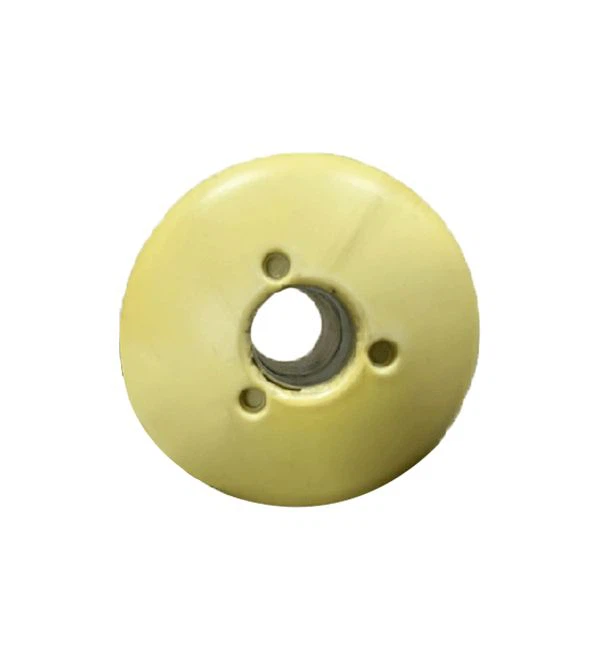
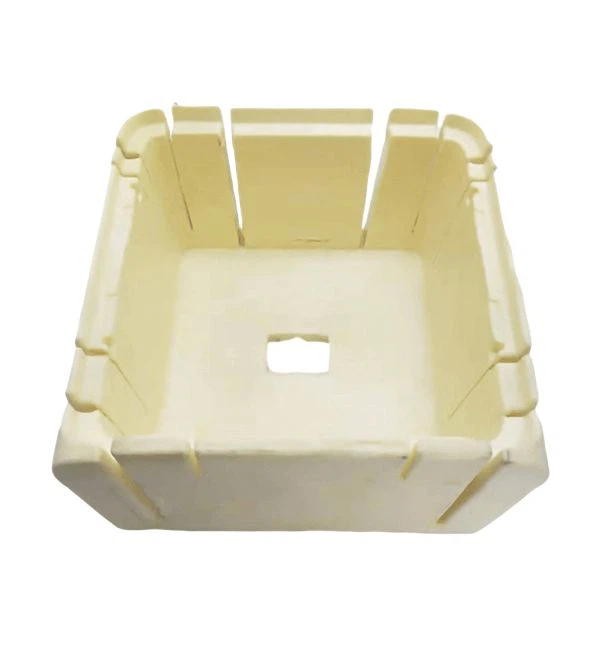
As a machine parts supplier, I understand the importance of providing high-quality gears that meet the specific needs of my customers. That's why I offer a wide range of gears, including Foam Machine Part and High Density Foam Machine Parts. These gears are made from high-quality materials and are designed to withstand the rigors of industrial use.
Whether you're a small business owner looking for replacement parts for your machinery or a large manufacturer in need of custom gears, I've got you covered. I work closely with my customers to understand their requirements and provide them with the best possible solutions. I also offer competitive pricing and fast delivery times to ensure that you get the parts you need when you need them.
So, if you're in the market for high-quality machine parts, including gears, don't hesitate to get in touch. I'm always happy to answer any questions you might have and help you find the right parts for your application. Let's work together to keep your machines running smoothly and efficiently.
References
- "Machinery's Handbook" by Industrial Press Inc.
- "Mechanical Engineering Design" by Joseph E. Shigley and Charles R. Mischke
- "Fundamentals of Machine Component Design" by Juvinall and Marshek